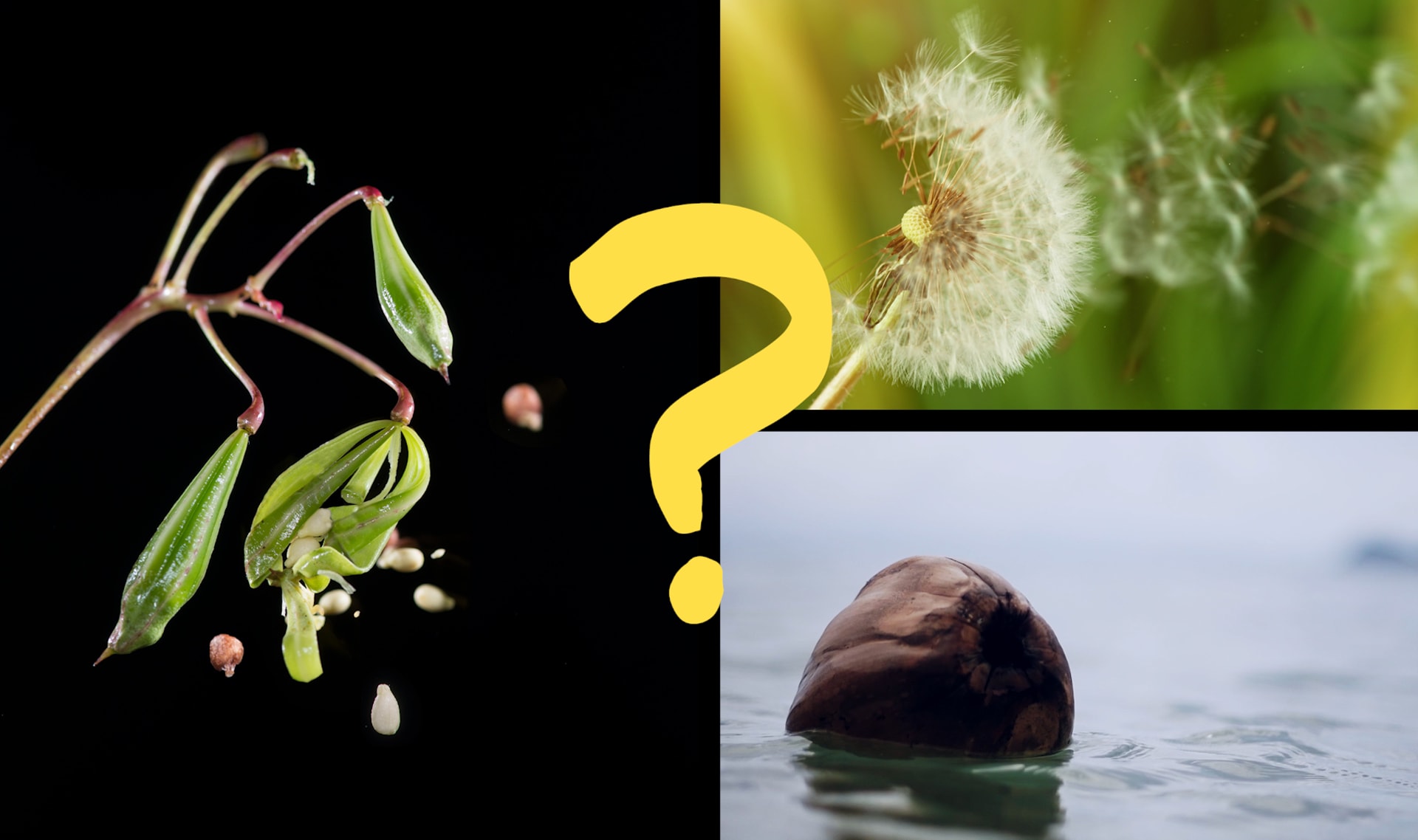
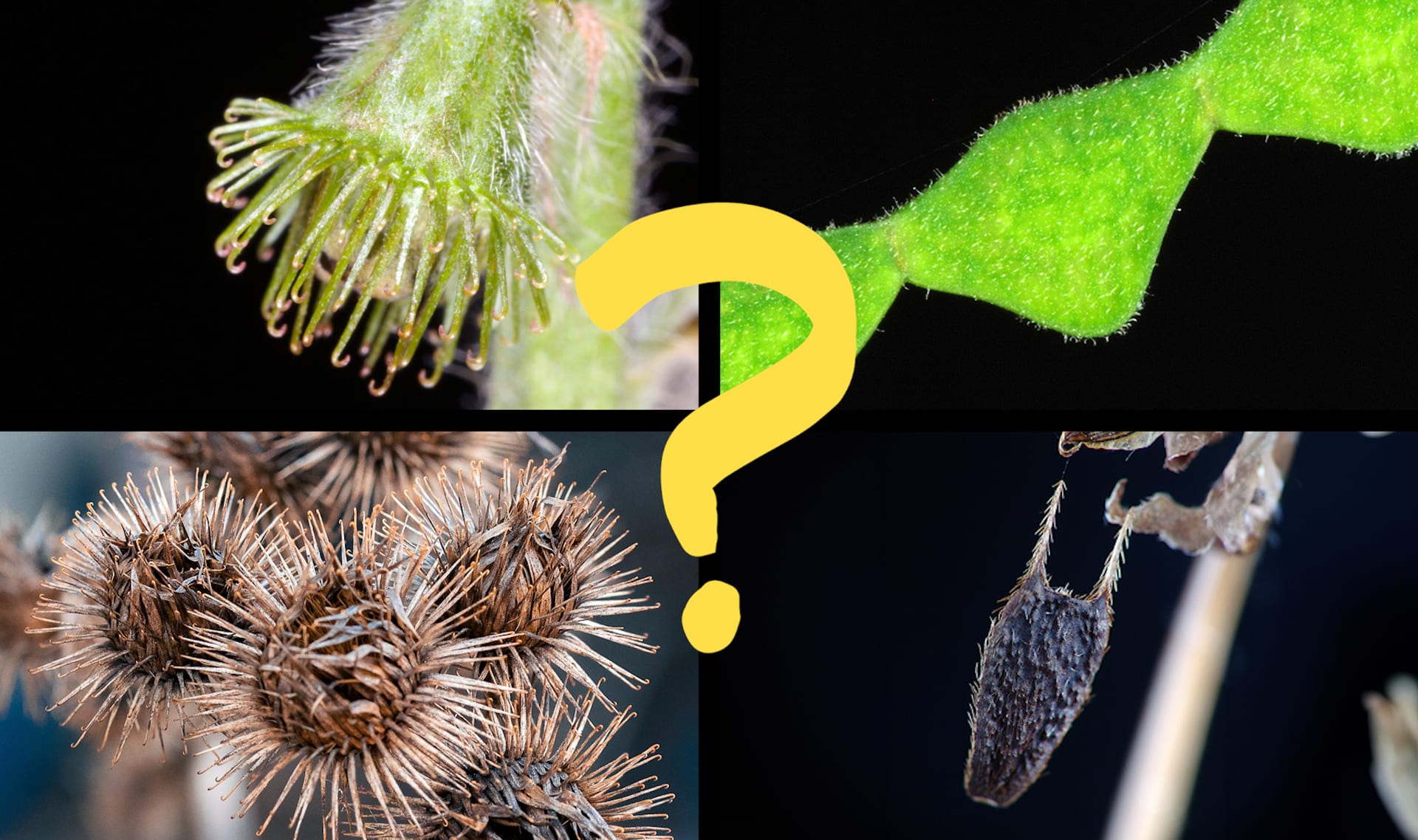
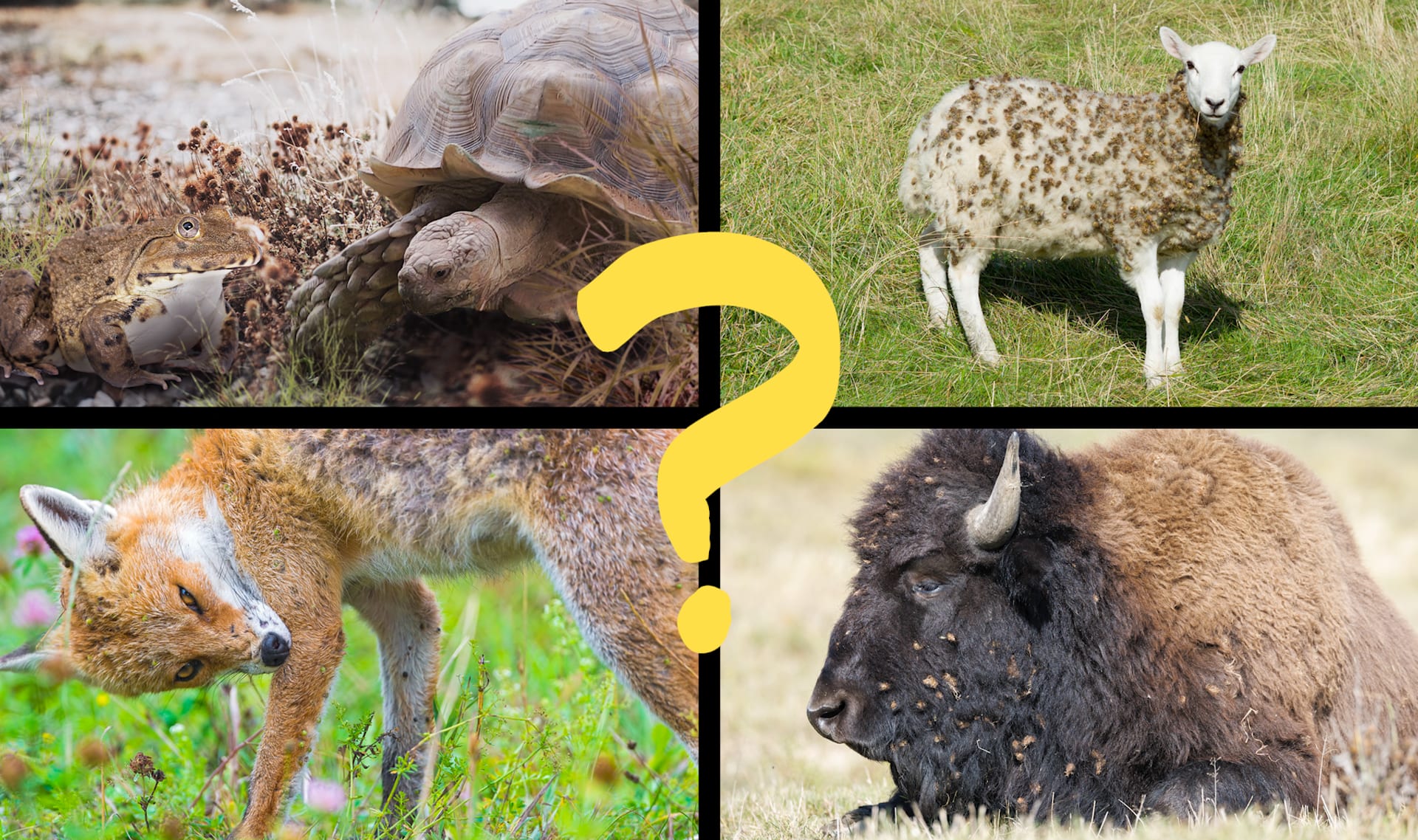
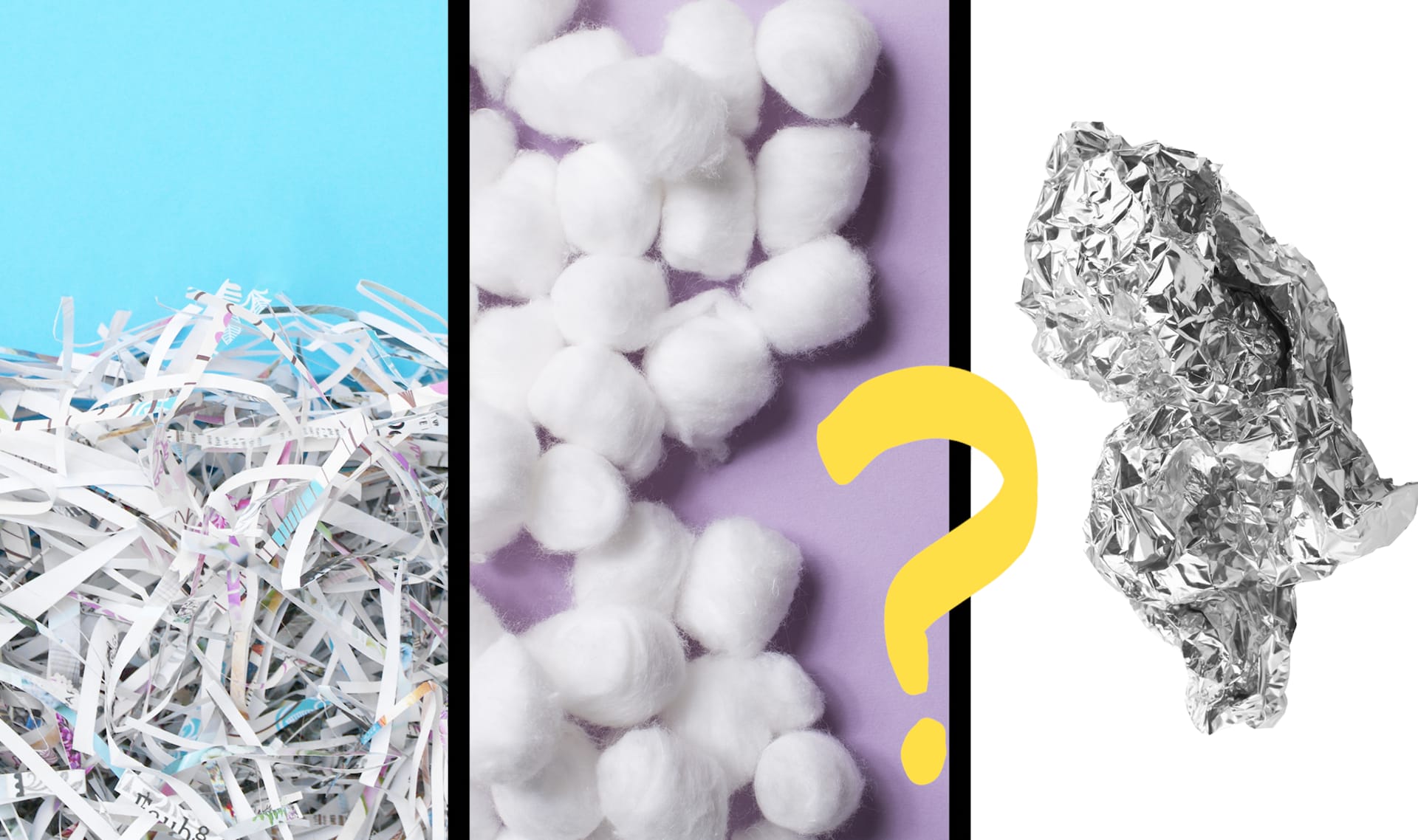

| Fluffadoo Seed Travel worksheet | 30 copies |
| Fluffadoo Seed Travel Answer Key teacher-only resource | 1 copy |
|
Markers
|
30 markers |
|
White Glue
Liquid glue is required. Glue sticks will not work.
|
15 glues
|
|
Black Beans (Dried)
Any medium-sized dried bean or a pony bead should work. Used as Seed B.
|
30 beans
|
|
Cotton Balls
|
180 cotton balls |
|
Dixie Cups (3 oz)
|
30 cups |
|
Plastic Plates (10")
Used to catch excess glue. Paper plates or plastic trays also work.
|
30 plates
|
|
Pompoms
Strongly recommend using medium sized pompoms (~2cm). Used as Seed A.
|
30 pompoms
|
We suggest students work in pairs. Homeschool students can work on their own.
Make sure students have space to hop up and down in place near their desks.
Materials for this activity are needed at three different steps, so we suggest organizing them beforehand for easier distribution. Students need these supplies in Step 1
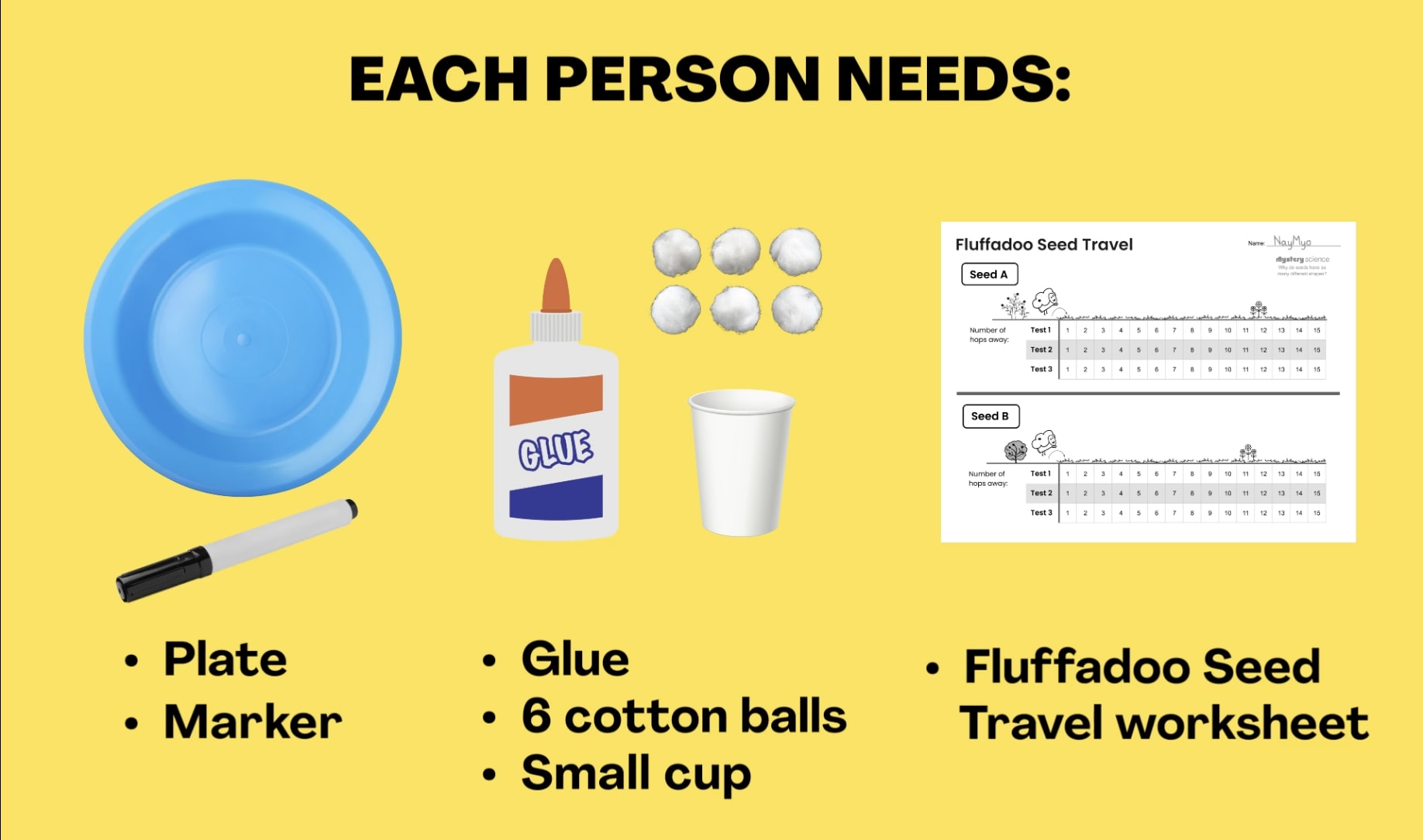
Seed A (pompom) is distributed in Step 7 and Seed B (bean) is distributed in Step 14.
If Seed A is consistently falling off of a student's fluffadoo within a few hops, we suggest checking: (1) the pompom is being placed where multiple cotton balls touch (rather than on top of a single cotton ball) and (2) the student is “hopping gently” and not shaking their fluffadoo too hard while hopping.
Instead of hopping in place, students can test their fluffadoo + seed by raising and lowering their arms while seated (mimicking the motion of a hopping fluffadoo).
Develop a simple sketch, drawing, or physical model to illustrate how the shape of an object helps it function as needed to solve a given problem.
Develop a simple model that mimics the function of an animal in dispersing seeds or pollinating plants.

Locked
6:10

Why is the sky blue?
Locked
4:41
Why do we call them doughnuts?
Locked
5:16
Could a turtle live outside its shell?